


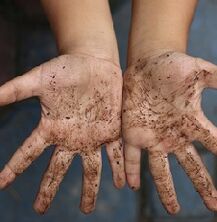
Worms in children are a common invasive disease in children of any age, which is not necessarily a sign of parental negligence, and can develop even with proper observance of personal hygiene rules.
Worms are various worms that parasitize in the child's body, namely in the lumen of the intestine, in the parenchyma of the liver and lungs, and in other tissues.In the structure of the general occurrence of worms in children, the leading positions are occupied by roundworm and fungal infections.Tapeworms rarely affect children and are found in only 5% of all helminthic infections, as infection occurs only when eating raw meat or fish, which are not often included in the average child's diet.
Worm infection in the child's body usually occurs as a result of eating improperly cleaned food, improper hand washing, and especially often contact with infected pets.Unlike adults, children are at risk of developing helminthic infections, which can be explained by the anatomical characteristics of the underdeveloped protective barriers of the gastrointestinal tract.
Classification
Helminths living and multiplying in the human body are divided into 3 groups:
- Nematodes or roundworms - pinworms (the causative agent of enterobiasis), roundworms (the causative agent of ascariasis), trichinella (the causative agent of trichinellosis), whipworm (the causative agent of trichocephalosis), etc.This group of worms occurs most often in young children.
- Cestodes, or flat (tape) worms - echinococcus, cattle tapeworm (the causative agent of taeniarinosis), rat tapeworm (the causative agent of hymenolepiasis), pig tapeworm (the causative agent of taeniasis).
- Trematodes, or flukes - Siberian or cat flukes (the causative agent of opisthorchiasis), liver fluke (the causative agent of fascileosis), etc.
The localization of parasites is the digestive system, liver, brain, lungs, heart, retina, bile ducts and gall bladder, pancreas.The larvae and adults of the helminth move with the bloodstream throughout the body.
How can you get infected?
Entry of fungal eggs into the gastrointestinal tract causes infection.They are expelled into the external environment with contaminated excrement.The eggshell is extremely resistant to the external environment and is small in size.The baby's curiosity is realized with his fingers;the child who is exploring the world actively touches everything that comes into his hands and immediately puts it in his mouth, tasting the strength and taste.In this way, the mushroom eggs safely enter the digestive system of their future host.
The child's body has weak protective reactions against parasites, which leads to their active reproduction.The child becomes infected with worm eggs from the surface of unwashed fruits or from drinking contaminated water.Very often, infection occurs during communication with animals or when playing on the ground, in the sandbox, where cats and dogs like to solve their physiological problems.After a walk, children often do not wash their hands, and all the dirt gets into their mouths along with the parasite eggs.Anyone who hasn't will say so and be right.Therefore, all children suffer from parasitic diseases.From any social class and any upbringing.
Of course, the risk of a parasite getting into the intestines increases if you are at home:
- hygiene rules are not followed;
- Wet cleaning is not done regularly;
- children are offered unwashed vegetables and fruits;
- animals live;
- The child cannot wash his hands after walking or using the toilet, especially before eating.
Symptoms
The first signs of worm infection in children appear after 2-3 weeks.If timely medical help is not provided in the fight against helminthiasis, the disease goes into a chronic stage.The course of the disease depends on the type of helminthiasis.Tapeworms, roundworms and hookworms can live in the child's body.In children, roundworms, pinworms, trematodes, cattle and pig tapeworms are the most common.
Pinworms are small worms that lay their eggs near the anus.In the case of this type of helminthiasis, a typical symptom is itching in the anal area.Toxacara parasites cause cough, allergy, fever and suffocation attacks in the child's body.
What other signs of worms can be observed in children?As a result of the presence of helminths, the child's immunity is significantly reduced.In this case, the baby begins to suffer more often from infectious and inflammatory diseases, colds, and allergic reactions occur more and more often.Worms release harmful toxins into the child's body that interfere with the child's overall development and affect digestion, growth and physical activity.
How to find out if the child has worms?To do this, first of all, you need to pay attention to the general well-being of the child and pass all the necessary tests.
The main symptoms of childhood helminthiasis:
- indigestion;
- bloating;
- pain in the lower abdomen;
- pain in the upper abdomen;
- increased fatigue;
- frequent allergies;
- frequent colds;
- common diseases of the upper respiratory tract;
- decreased activity;
- aching joints;
- muscle pain;
- itching in the anal area;
- dry cough;
- chest pain;
- weight loss;
- weak immunity;
- the presence of worms in the stool.
Extensive helminthic infection can cause many serious and dangerous complications.As a result of worm infection, hepatitis, jaundice, acute allergic reaction and pyoderma can develop in children.Worms can often cause reduced vision and strabismus.Worms also cause acute lung failure, meningoencephalitis, convulsions, intestinal obstruction and urinary incontinence.
Worms in a child's stool are an immediate reason to consult a doctor.A pediatrician or family therapist writes a referral for the necessary examinations, and then refers you to a specialist for further examination and treatment.
Signs of pinworm in children
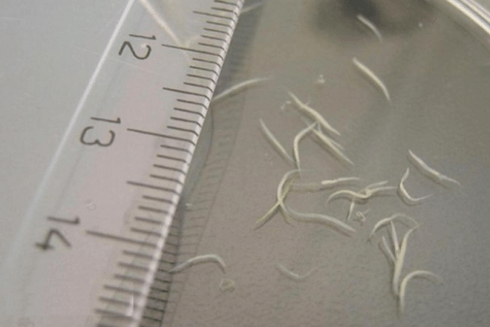
Pinworms are helminths that cause enterobiasis;small worms, up to 1 cm long.The infected child spreads fungal eggs in its environment, on clothes, door handles, toys, and utensils.UV radiation, boiling and some disinfectants are dangerous for dumplings.The worm eggs enter the mouth and from there into the intestines.After a few days, the larvae emerge from the eggs, become sexually mature and ready to reproduce and lay eggs.The life cycle of a dumpling is only 2 weeks.
In children, the pronounced symptom of these worms is itching at night in the folds of the anus, when the body warms up in a warm bed and its muscles relax.The pinworm crawls up the skin near the anus and lays more than 5,000 eggs in its folds.By scratching the irritated skin of the anal area, the child spreads these eggs under the nails.In addition to itching, the child may also experience skin damage caused by scratching.
Additional symptoms of enterobiasis in children:
- Restless sleep due to disturbing itching, possible insomnia, crying at night;
- Weight loss, insufficient weight gain due to age;
- Agitation, increased fatigue, bad mood, attention deficit, memory impairment;
- Enuresis in girls due to worms entering the urethra;
- Vulvovaginitis due to irritation of the vagina caused by helminths crawling there, less often - inflammation of the appendages and uterus;
- The development of acute appendicitis due to the accumulation of worms in the appendix;
- Nighttime teeth grinding is a suspected symptom;
- Digestive disorders - dysbacteriosis, enterocolitis, diarrhea;
- Anemia, increased morbidity due to lack of nutrients, vitamins, microelements;
- Poisoning phenomena as a result of toxic poisoning of the body (weakness, weight loss, nausea, headache).
Signs of ascariasis
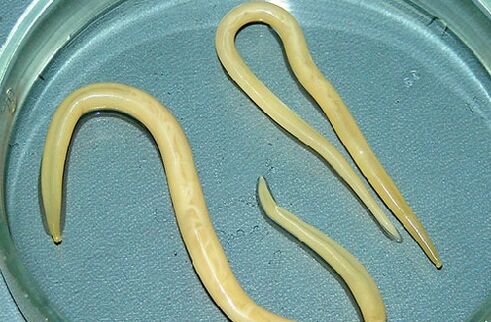
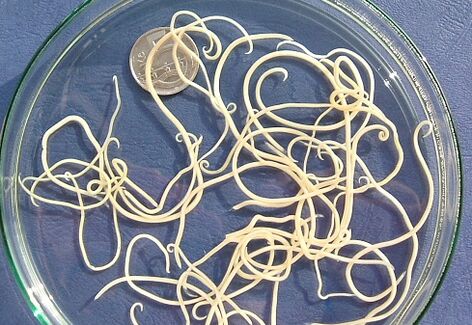
The problem of helminthiasis in children under 5 years is quite acute.This phenomenon is due to the fact that the constant exposure of the growing organism to toxic substances leads to serious consequences and disruption of the functioning of internal organs and systems.One of the most dangerous types of helminthiasis is ascariasis, which can affect all organs of the child's body.Roundworms are larger worms than pinworms and pose a greater health risk.
As in the case of enterobiasis, the child becomes infected with ascariasis if the basic rules of hygiene are not followed.Insufficient mechanical and thermal processing of food, constant contact of the child with the soil (in the sandbox), as well as the presence of insects in the room where the child lives, can lead to the appearance of helminthic infections in the body.From the moment the roundworm larvae first enter the child's body and spread throughout the body through the bloodstream, no more than 3 months pass.The most likely place for their localization is the lumen of the small intestine, liver tissue, heart and lungs.
In the case of ascariasis, the first signs of worms in children are:
- a sudden rise in body temperature to 38 degrees;
- general weakness, malaise;
- the appearance of a dry cough or the presence of sputum with an orange tint.
It should be noted that coughs caused by worms in children can develop into more serious conditions.Against the background of ascariasis infection, such serious complications as bronchial asthma, purulent pleurisy, obstructive bronchitis and pneumonia can develop in the child's body.Enlargement of the peripheral lymph nodes, liver and spleen (hepatosplenomegaly) may also occur.
A characteristic symptom of ascariasis in children is allergic reactions of the skin, which are expressed in the form of hives and allergic dermatosis.Allergic rashes are located on the feet and hands.After three months from the moment of primary infection, adult roundworms can enter the intestinal lumen of the child, causing dysfunction of the gastrointestinal tract.During this period, the following symptoms appear:
- intestinal dysfunction (diarrhea, constipation);
- increased gas formation in the intestines (bloating);
- the appearance of crampy pain in the abdominal area;
- nausea vomiting;
- weight loss;
- itching in the anus.
The long-term presence of helminthic infections in the child's body leads to a permanent decrease in immunity, which causes the development of purulent diseases of the mucous membrane and skin.Helminth infections caused by roundworm larvae cause severe poisoning in the child's body, which manifests itself in the form of various neuropsychiatric disorders, such as difficulty falling asleep, nightmares, and epileptic seizures.
Symptoms of infection with other types of helminths
- Toxocariasis is accompanied by an allergic cough with suffocation, pulmonary infiltration, puffiness of the face and eye diseases (ophthalmitis, chorioretinitis, keratitis).
- Opisthorchiasis (feline distemper, Siberian distemper infection) manifests itself in the form of skin rashes, fever, enlarged lymph nodes and hepatitis.
- Trichocephalosis (whipworm infection) is often asymptomatic, sometimes gastrointestinal disorders, physical and mental retardation are observed.
- Broad tapeworm infection is accompanied by non-specific intestinal disorders, anemia and abdominal pain.
- Hymenolepidosis (caused by the pygmy rat tapeworm) manifests itself in the form of an allergic, vasomotor rhinitis.
Diagnosis of helminthiasis
What should be done if a helminthic infection is suspected in a child?First of all, you should consult a specialist, a pediatrician or an infectious disease specialist.A test can tell if your baby has parasites.
- Clinical blood test.If helminthic infection is confirmed, the analysis includes symptoms of anemia (anemia), increased ESR (erythrocyte sedimentation rate) and eosinophilia (eosinophils increased by more than 5%).
- A general urinalysis may show an increased epithelial content.
- The stool is examined for worm eggs.It should be noted that a negative stool test does not indicate the absence of helminths in the child's body.For example, the analysis can be carried out in the lung phase of ascariasis, when the larvae are in the lungs and not in the faeces.
- Scraping of enterobiasis allows pinworm eggs to be identified.
- Enzyme immunoassay blood test.Blood is given for worms to determine the presence of antibodies against the causative agent of helminthiasis.This is the most informative analysis;it shows exactly whether the child is suffering from an acute or chronic illness.
- X-ray examination of the lungs for suspected ascariasis.
How to remove worms from a child
Today, there are quite a few very effective anthelmintic drugs, which have a pronounced effect, but are toxic, and can only be prescribed by the attending physician, preferably a parasitologist, based on the diagnosed helminthiasis.Each drug has its own specific activity for a specific type of worm;some drugs have a broad spectrum of action.
In addition to anthelmintic therapy, the doctor may also prescribe antihistamines to reduce allergic reactions.
In order to avoid negative health consequences, drugs for the treatment of worms in children are prescribed by a specialist;do not self-medicate.
Treatment of worms in children includes repeated anthelmintic therapy 2 weeks after the first one, since the risk of reinvasion, i.e. self-infection, is very high in the case of enterobiasis.
There are also folk methods for removing worms, but their application should be considered more of a prevention, since with the accurate diagnosis of roundworms or fungal worms, first of all, drug treatment should be carried out, the most effective treatment of worms in children, and then supplemented with folk methods, for example the use of pumpkin seeds, various garlic therapy options, enemas, etc.
Folk remedies
You can also get rid of worms with the help of effective folk recipes.How to remove worms from a child using traditional medicine?There are quite a few treatment methods.The most effective and proven recipes for the fight against helminths:
- Papaya is the best medicine for health.Unripe papaya contains an enzyme called papain, which acts as an anthelmintic and kills worms in the intestines.Also, papaya seeds are used to expel worms from the stomach.Grind the papaya seeds and mix a tablespoon of the mixture in warm milk or water.Ask your child to drink the drink in the morning three days in a row.Mix one tablespoon of raw papaya and one tablespoon of honey in warm milk or water.Drinking this drink on an empty stomach will help ward off intestinal worms.
- Pumpkin seed.A very effective remedy that can help get rid of helminths.In this case, the prerequisite for successful treatment is the daily consumption of seeds for several months.Eat 50-100 g of pumpkin seeds every morning before meals.If the baby refuses to eat it, you can grind the seeds in a coffee grinder and mix them with milk.
- Garlic is a natural anthelmintic for children.This remedy is known to be effective against parasitic worms.Raw garlic contains amino acids and sulfur that help kill parasites and get rid of them.Eating three cloves of raw garlic on an empty stomach helps in comprehensive deworming.
- Chinese bitter gourd.Although it has a slightly sour taste, it is very effective in fighting intestinal worms.Mix a cup of bitter gourd juice with water and honey and give it to your child twice a day.
- Cloves kill existing intestinal worms and their eggs and prevent future infections.Add a teaspoon of cloves to a glass of hot water and let it steep for 20 minutes.This water should be drunk three times a week to avoid infection.
- Indian violet has anti-parasitic properties and can kill various intestinal worms.Mix the powdered leaves in warm milk and honey.Offer it to your child twice a week.
Traditional home remedies help to relieve the infection, but do not cure it completely.They are not a substitute for prescription medications.
Prevention
The most important rule that helps to avoid infection with parasites is the observance of personal hygiene rules for both adults and children.Parents should wash their hands before any contact with their child.
- When your baby starts to crawl or walk independently, don't let him play in the toilet or hallway, and don't let him put on shoes.
- Also keep away from pets, as they are potential carriers of helminths.
- Do wet cleaning often and keep your child's toys clean.
- While walking, do not allow the baby to pick up any objects or dropped food from the ground.Contact with sick animals is strictly prohibited.
- Also, remember to wash vegetables and fruits before eating.Meat and fish must be subjected to appropriate heat treatment.
It is the responsibility of parents to teach their child to take precautions to avoid contracting worms.But if this happens, be sure to consult a doctor to prescribe a safe treatment that will quickly rid the child of parasites.You should not hesitate, because helminths have an extremely negative effect on the fragile child's body.